Call us today!: (440) 610-2804
Summary:
Timing is one of the most overlooked factors in roof insurance claims. Many homeowners don’t realize that insurance policies have deadlines for reporting damage. This guide explains how long you typically have to file a claim in Ohio and why acting quickly can protect your coverage.
Why Timing Matters After a Storm
After a storm, it’s common to take a “wait and see” approach—especially if there’s no visible leak.
However, delaying too long can:
- Reduce your chances of claim approval
- Allow damage to worsen
- Make it harder to prove storm-related impact
Insurance companies expect timely reporting, even if damage isn’t immediately obvious.
Typical Timeframes for Filing a Claim
Most insurance policies allow anywhere from:
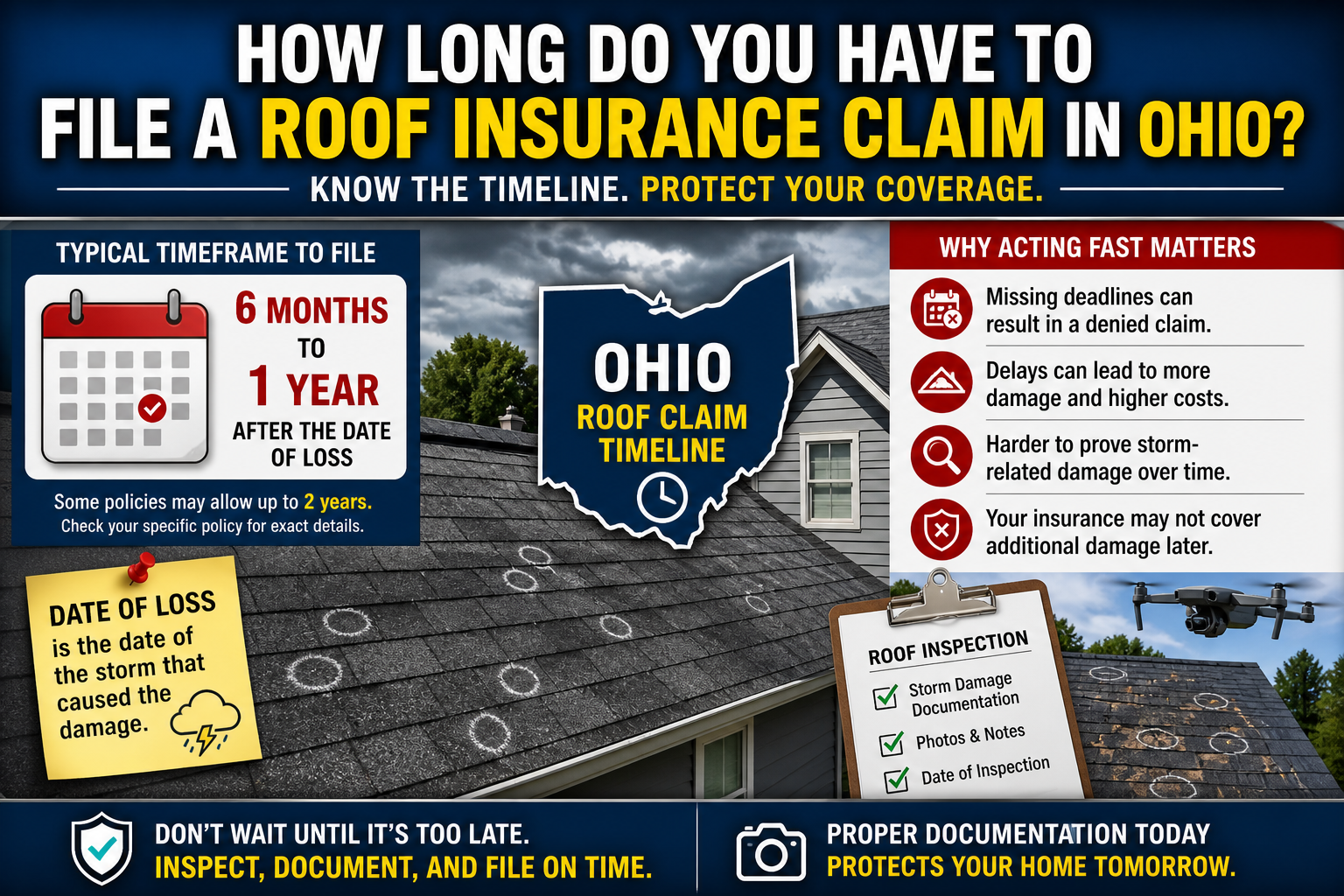
- 6 months to 1 year after the date of loss
- Some policies may allow up to 2 years
However, this varies by:
- Insurance provider
- Policy type
- Specific coverage terms
The safest approach is always:
File as soon as damage is identified
What Is the “Date of Loss”?
The “date of loss” refers to:
- The specific storm event that caused the damage
This is important because:
- Your claim timeline starts from this date
- Not from when you notice the damage
If multiple storms occurred, documentation helps determine which event applies.
Why Waiting Can Hurt Your Claim
Delays can create problems such as:
- Damage being labeled as “wear and tear”
- Reduced credibility of the claim
- Difficulty proving storm-related impact
- Denials due to missed deadlines
Even legitimate damage can be questioned if too much time passes.
The Role of Inspections
A professional inspection helps:
- Identify damage early
- Document the condition of your roof
- Establish a timeline
- Support your claim if you decide to file
If you’re unsure what an inspection should include, review
what a free roof inspection should actually include (internal link).
What If You Miss the Deadline?
If you wait too long:
- Your claim may be denied outright
- You may lose eligibility for coverage
- Repairs may become your responsibility
In some cases, if damage worsens due to delay, insurance may not cover additional repairs.
How Documentation Supports Timing
Having proper documentation helps:
- Prove when damage occurred
- Show progression of the issue
- Strengthen your claim timeline
Our article on
why roofing documentation makes or breaks insurance claims (internal link)
explains how evidence supports your case.
Local Expertise Helps You Act Quickly
Working with a local company like Jarrell Roofing ensures:
- Fast inspections after storms
- Accurate documentation
- Guidance on whether filing makes sense
Local experience means faster response and better understanding of Ohio storm patterns.
Final Thoughts
When it comes to roof insurance claims, timing is just as important as damage.
The sooner you identify and document issues, the stronger your position becomes.
Not Sure If You Should File a Claim?
Jarrell Roofing offers free inspections with full documentation, helping homeowners determine whether filing a claim makes sense—before deadlines become an issue.
📞 Schedule your inspection today and stay ahead of the timeline.