
Call us today!: (440) 610-2804
Summary:
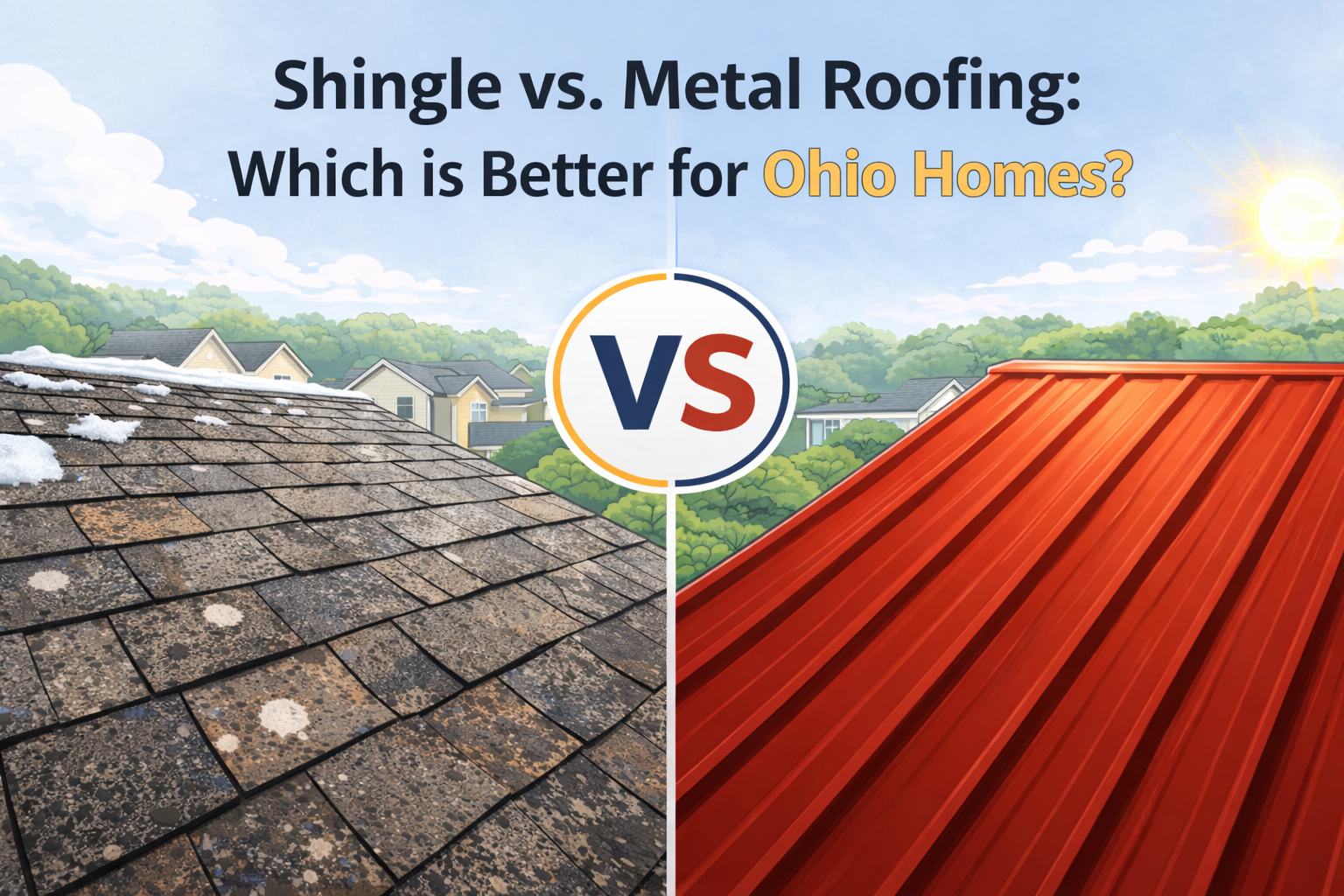
Choosing between shingle and metal roofing in Ohio isn’t just about looks—it’s about weather, lifespan, insurance, and long-term cost. This guide breaks down the real differences between asphalt shingles and metal roofing so homeowners can make a confident, informed decision.
Why Roofing Choice Matters More in Ohio
Ohio roofs deal with hail, wind, heavy snow, ice dams, and rapid temperature swings—sometimes all in the same year. The right roofing system isn’t just about today’s price; it’s about how the roof performs five, ten, and twenty years from now.
If you haven’t already, read Week 1: How to Tell If Your Roof Has Storm Damage (Even If It’s Not Leaking) to understand how Ohio storms quietly shorten roof lifespan.
Asphalt Shingle Roofing: The Most Common Choice
Pros of Shingle Roofing
- Lower upfront cost
- Faster installation
- Widely available styles and colors
- Easier spot repairs
Cons of Shingle Roofing in Ohio
- Shorter lifespan (typically 15–25 years)
- Vulnerable to hail bruising and wind lift
- Granule loss accelerates under freeze–thaw cycles
- More frequent insurance claims over time
Shingles perform well until they don’t—and Ohio weather speeds up that decline.
Metal Roofing: Built for Harsh Weather
Pros of Metal Roofing
- 40–70+ year lifespan
- Excellent wind resistance
- Snow and ice shed naturally
- Minimal hail damage compared to shingles
- Lower long-term maintenance
Standing seam metal roofs are especially popular in Ohio because they eliminate exposed fasteners—the most common leak point.
Cons of Metal Roofing
- Higher upfront cost
- Requires experienced installers
- Repairs must be done correctly to avoid cosmetic issues
How Snow and Ice Behave Differently
One major Ohio advantage of metal roofing: snow slides off instead of piling up.
That reduces:
- Ice dam formation
- Gutter damage
- Excess roof load
Shingle roofs tend to hold snow longer, increasing freeze–thaw stress.
Insurance Considerations
Insurance companies look at:
- Wind resistance ratings
- Hail impact resistance
- Expected lifespan
Metal roofs often:
- Reduce claim frequency
- Qualify for premium discounts (carrier-dependent)
- Hold value longer during inspections
This ties directly into Week 2: What a “Free Roof Inspection” Should Actually Include, where documentation plays a key role in insurance decisions.
Cost Comparison: Short-Term vs Long-Term
While shingles are cheaper upfront, metal often wins long-term:
| Roofing Type | Typical Lifespan | Replacement Cycles (50 yrs) |
|---|---|---|
| Shingle | 20 years | 2–3 roofs |
| Metal | 50+ years | 1 roof |
Metal costs more initially—but avoids repeated tear-offs, labor, and insurance hassle.
Which Roof Is Right for You?
Choose shingles if:
- Budget is the top priority
- You plan to move within 10–15 years
- You prefer traditional appearance
Choose metal if:
- You plan to stay long-term
- You want durability and lower maintenance
- You’re in a high wind or snow-load area
- You want the strongest insurance profile
Local Experience Matters
Material choice means nothing without proper installation—especially in Ohio conditions. A contractor familiar with local storms, insurance expectations, and proper ventilation makes all the difference.
That’s where Jarrell Roofing helps homeowners evaluate both options honestly—not push one material for convenience.
Final Thoughts
Not Sure Which Roof Makes Sense?
Jarrell Roofing offers free inspections and material consultations, explaining whether shingle or metal roofing fits your home, budget, and insurance goals.
📞 Schedule your inspection today and get clarity—before the next storm decides for you.There’s no universal “best” roof—only the best roof for your home, location, and long-term plans. Understanding the tradeoffs now prevents regret later.
Contact us today for a FREE inspection.
✓ No obligation