Call us today!: (440) 610-2804
Summary:
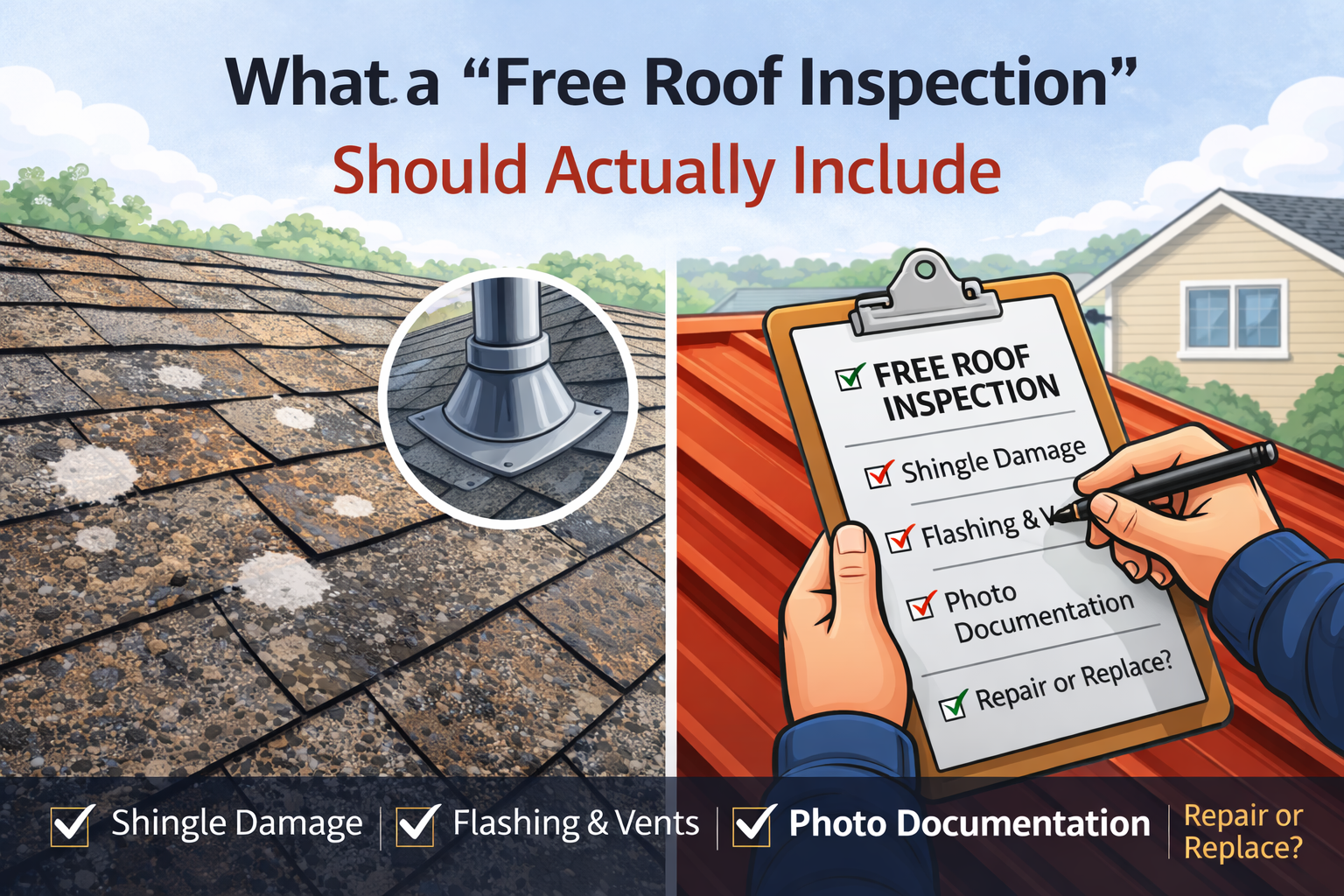
Not all free roof inspections are equal. A proper inspection should identify storm damage, document issues for insurance, and clearly explain whether repair or replacement is needed—without pressure or vague answers. This guide breaks down what homeowners should expect from a legitimate roof inspection and how it protects you long-term.
Why “Free Roof Inspection” Can Mean Very Different Things
Many roofing companies advertise free inspections, but the quality and intent vary widely. Some inspections last only a few minutes and are designed to push a quick sale rather than provide real answers.
A true inspection is diagnostic, not promotional.
If you haven’t yet read Week 1, start there to understand why storm damage often exists even when a roof isn’t leaking. That context matters before any inspection takes place.
Step 1: Exterior Roof Surface Evaluation
A real inspection starts with a close evaluation of the roof surface, including:
- Shingle condition and granule loss
- Hail impact bruising and fractures
- Wind damage and lifted shingles
- Fastener integrity
- Ridge caps and hip lines
This step determines whether damage is cosmetic, functional, or insurance-relevant.
🔗 This directly connects to identifying storm damage early, as explained in How to Tell If Your Roof Has Storm Damage (Even If It’s Not Leaking).
Step 2: Flashing, Vents, and Penetrations
Most roof leaks don’t start in the middle of a shingle—they start at weak points.
A proper inspection checks:
- Chimney flashing
- Pipe boots and vent seals
- Skylight flashing
- Wall transitions and step flashing
These areas fail silently and are often overlooked by rushed inspections.
Step 3: Gutter & Drainage Review
Gutters tell a story about your roof’s health. An inspection should look for:
- Excessive shingle granules
- Improper drainage
- Gutter separation from fascia
- Ice dam indicators (in winter-prone areas)
Granules in gutters often confirm storm-related shingle damage—even if the roof looks “okay” from the yard.
Step 4: Attic & Interior Indicators (When Accessible)
When possible, a professional inspection includes:
- Checking for moisture staining
- Ventilation assessment
- Heat and condensation issues
- Early mold indicators
This step helps confirm whether roof issues are already affecting the structure.
Step 5: Photo Documentation (Critical for Insurance)
One of the most important parts of an inspection is documentation.
A legitimate inspection should provide:
- Clear photos of damage
- Marked impact areas
- Notes suitable for insurance adjusters
- An explanation of why damage qualifies
Without documentation, even real storm damage can be denied by insurance.
Step 6: Honest Repair vs Replacement Assessment
A trustworthy roofer will explain:
- What can be repaired
- What must be replaced
- What insurance typically covers
- What timelines matter
If the answer is always “you need a new roof,” that’s a red flag.
What a Free Inspection Should NOT Include
Be cautious if an inspection:
- Takes less than 10 minutes
- Doesn’t include photos
- Avoids insurance questions
- Pressures you to sign immediately
- Won’t explain findings clearly
Why Local Experience Matters
Roofing inspections aren’t universal. Ohio weather creates specific damage patterns from hail, wind, and freeze–thaw cycles. Local knowledge makes a measurable difference.
That’s why homeowners trust Jarrell Roofing for inspections that are thorough, documented, and pressure-free.
How This Protects You as a Homeowner
A proper inspection:
- Preserves insurance eligibility
- Prevents claim denials
- Stops small issues from becoming structural problems
- Gives you clarity—not confusion
When paired with early storm detection, inspections become a preventative tool, not a reaction.
Schedule a Free, No-Pressure Roof Inspection
If your roof has experienced recent storms—or you’re unsure about its condition—Jarrell Roofing offers free inspections with full documentation and clear explanations.
📞 Schedule your inspection today and protect your home before hidden damage becomes costly.
Contact us today for an inspection.
✓ No obligation