
Call us today!: (440) 610-2804
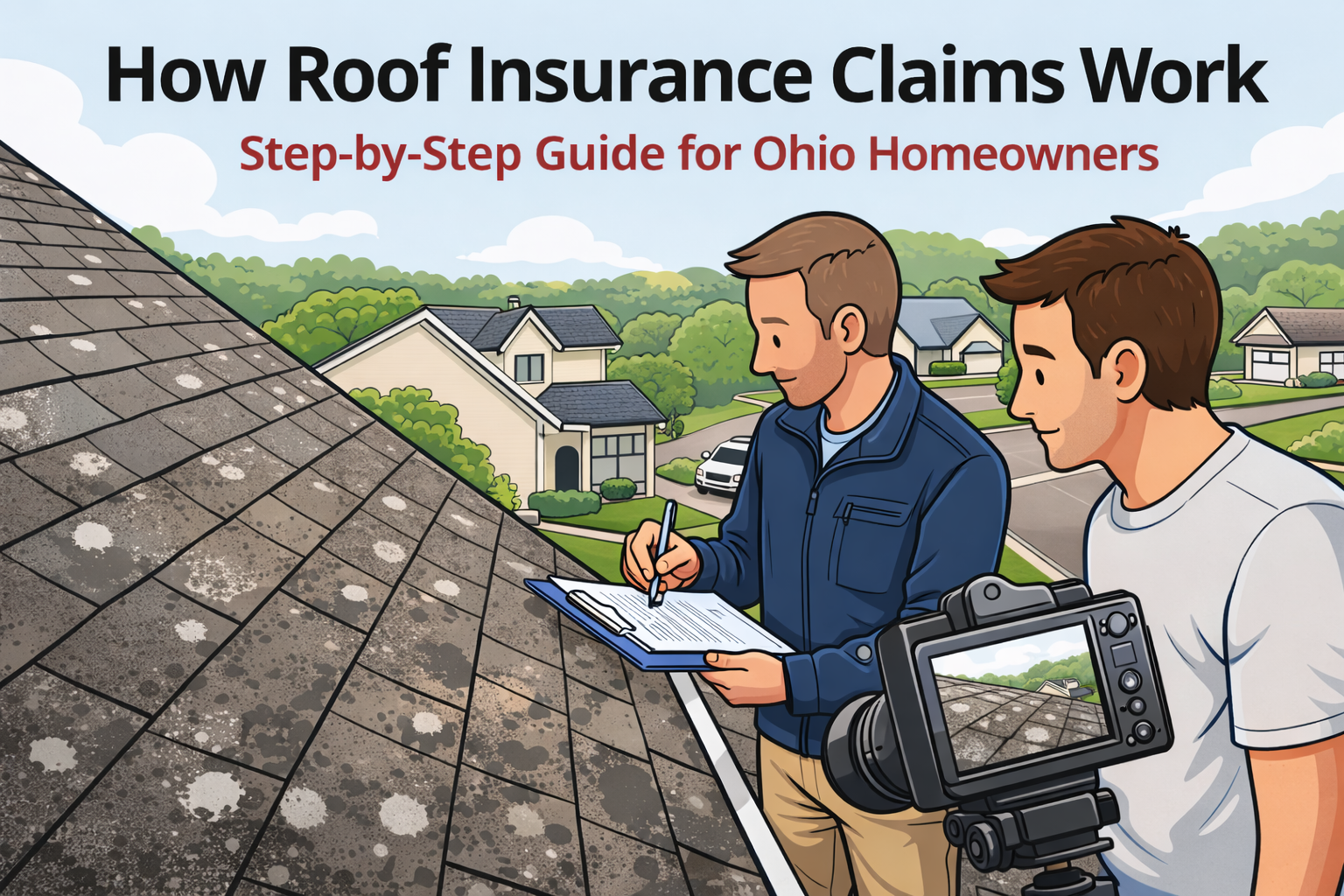
Summary:
Roof insurance claims can feel confusing, especially after a storm. This step-by-step guide explains how the claims process works in Ohio—from identifying damage to meeting the adjuster and understanding your settlement—so you can move forward with clarity and confidence.
Step 1: Identify Possible Storm Damage
Most claims start after:
- Hail or high-wind events
- Falling debris
- Sudden leaks following a storm
Important: Damage does not have to be actively leaking to qualify. Many issues are structural or impact-related.
If you’re unsure what to look for, review our related article on storm damage detection (internal link to: How to Tell If Your Roof Has Storm Damage).
Step 2: Schedule a Professional Roof Inspection
Before calling your insurance company, it’s smart to have a documented inspection.
A proper inspection should include:
- Shingle condition assessment
- Flashing and vent evaluation
- Photo documentation
- An honest repair vs replacement opinion
We explain what a legitimate inspection includes in detail in:
What a “Free Roof Inspection” Should Actually Include
Step 3: File the Claim
Once damage is verified, you contact your insurance provider to:
- Report the date of loss
- Describe the storm event
- Open a claim file
They will assign an adjuster to inspect your roof.
Step 4: Meet the Insurance Adjuster
This is one of the most important steps.
The adjuster will:
- Examine the roof
- Determine cause of damage
- Decide whether it qualifies under your policy
Having your roofing contractor present helps ensure:
- All damaged areas are identified
- Documentation is properly reviewed
- Nothing is overlooked
Step 5: Review the Insurance Estimate
Insurance companies typically provide:
- A scope of work
- An estimate for repair or replacement
- Details on deductible and depreciation
Common terms you may see:
- RCV (Replacement Cost Value)
- ACV (Actual Cash Value)
We’ll break those down in a future article on insurance payout structures.
Step 6: Approval and Project Scheduling
Once approved:
- Materials are ordered
- Timeline is scheduled
- Work begins
If the claim is denied, there may still be options depending on documentation and policy language.
Step 7: Final Documentation & Completion
After installation:
- Final invoices are submitted
- Depreciation (if applicable) is released
- Warranty documentation is provided
Clear paperwork at this stage protects you long-term.
Common Insurance Claim Mistakes
Homeowners often:
- Wait too long to report storm damage
- Assume no leak = no damage
- Skip professional documentation
- Choose contractors based only on price
Understanding the process ahead of time prevents these errors.
Why Process Matters in Ohio
Ohio’s frequent hail and wind events mean:
- Claims are common
- Adjusters move quickly during storm seasons
- Documentation quality makes a major difference
That’s why working with a local company like Jarrell Roofing helps ensure your claim is handled thoroughly and professionally.
Final Thoughts
Insurance claims don’t have to be stressful. When you understand the steps, timelines, and documentation requirements, you maintain control of the process.
Not Sure Whether You Should File a Claim?
Jarrell Roofing offers free roof inspections with photo documentation, helping you determine whether filing a claim makes sense before contacting your insurance provider.
📞 Schedule your inspection today and protect your home with confidence.
Contact us today for a FREE inspection.
✓ No obligation