Call us today!: (440) 610-2804
Summary:
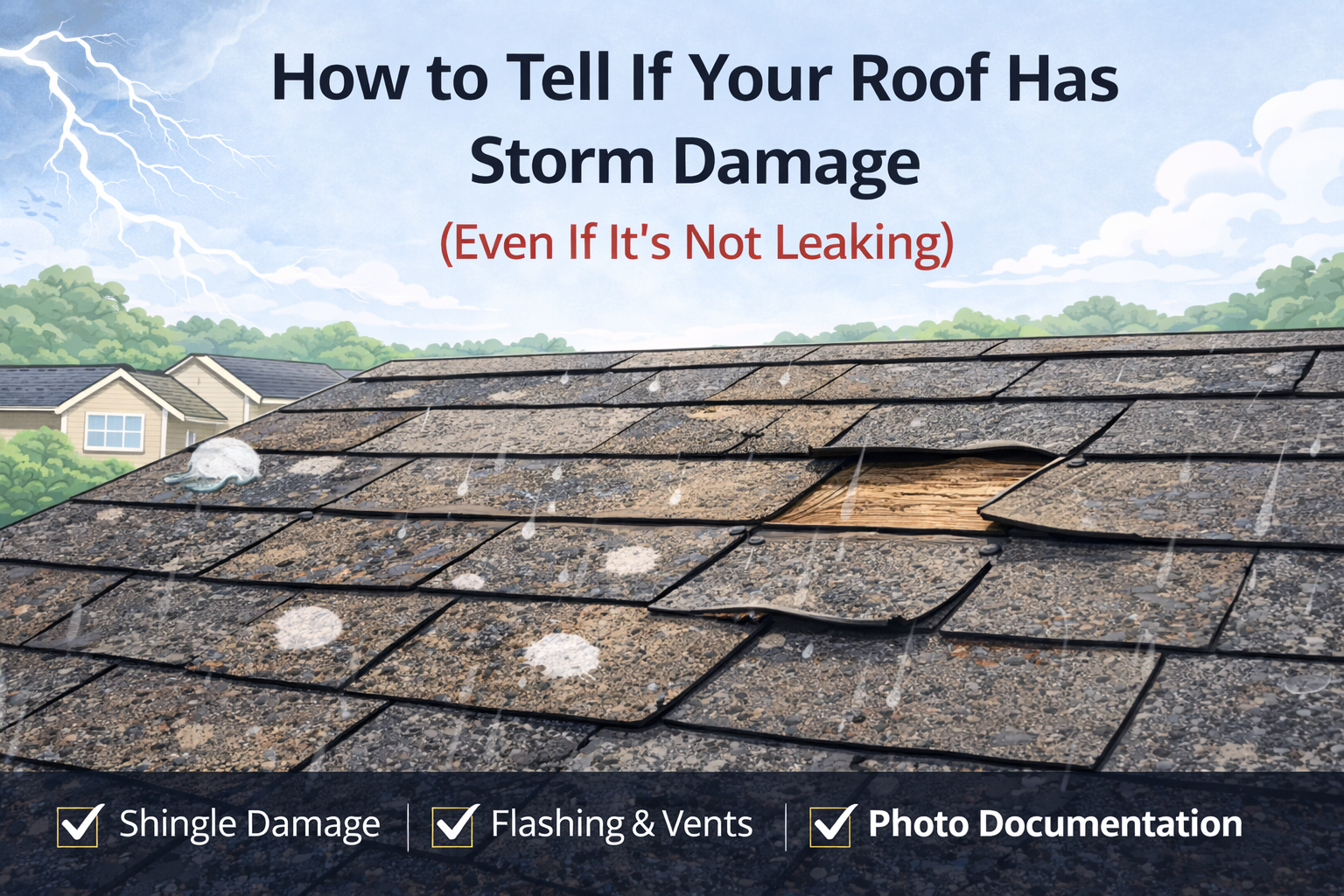
Storm damage doesn’t always show up as a leak right away. In Northeast Ohio, hail, wind, and rapid temperature changes can quietly damage shingles, flashing, and underlayment—often months before water enters the home. This guide explains how to spot storm damage early and when to schedule a professional inspection.
Why Roof Damage Often Goes Unnoticed
Most homeowners assume a roof problem equals an interior leak. In reality, storm damage usually starts on the surface and worsens over time. Hail can bruise shingles, wind can loosen seals, and freeze–thaw cycles can expand tiny cracks—none of which drip immediately.
Key point: Insurance companies understand this delay. That’s why documentation and timing matter.
Common Signs of Storm Damage You Can See From the Ground
You don’t need to climb on your roof to spot red flags. Look for:
- Missing or lifted shingles after high winds
- Granule buildup in gutters or at downspouts
- Uneven shingle texture or dark impact spots (hail bruising)
- Bent or detached flashing around chimneys and vents
- Debris patterns (branches, leaves) concentrated on roof valleys
If you notice any of these, the roof may already be compromised—even if the attic is dry.
What Hail Damage Actually Looks Like (And Why It Matters)
Hail damage isn’t always dramatic. Many impacts look like small, soft dents that crack the shingle mat beneath the surface. Over time, UV exposure and rain accelerate failure at those weak points.
Why insurance cares: Hail bruising reduces the roof’s lifespan and qualifies as storm damage, even without leaks.
Wind Damage Is More Than Missing Shingles
Strong winds don’t just tear shingles off—they break the seal that keeps shingles watertight. Once that seal fails, wind-driven rain can work its way underneath.
Watch for:
- Shingles flapping slightly in the breeze
- Edges that no longer lie flat
- Sections that look “patched” or uneven
Why Waiting Can Cost You
Delaying an inspection can lead to:
- Insurance claim denial due to “wear and tear”
- Interior damage not covered by roofing claims
- Mold or decking rot that increases repair costs
Most policies have time limits for reporting storm damage—even if the storm happened months ago.
Why a Professional Inspection Matters
A proper inspection includes:
- Shingle integrity checks
- Soft-spot detection
- Flashing and penetration evaluation
- Photo documentation for insurance
- Honest assessment: repair vs replacement
This isn’t something a quick glance—or a ladder at the eave—can catch.
When to Schedule an Inspection
You should schedule a roof inspection if:
- A major storm passed through your area
- Your roof is 8+ years old
- Neighbors are getting repairs or replacements
- You’re planning to sell or refinance your home
Local Experience Makes a Difference
Ohio’s weather is tough on roofs. A contractor familiar with local storm patterns, materials, and insurance expectations can spot damage others miss.
That’s where Jarrell Roofing comes in.
Final Thoughts
A roof doesn’t have to be leaking to be damaged. Catching storm damage early protects your home, strengthens insurance claims, and prevents costly repairs down the road.
Free Roof Inspection
If you suspect storm damage—or just want peace of mind—Jarrell Roofing offers free, no-obligation roof inspections and will walk you through your options clearly and honestly.
📞 Call or request an inspection today before small damage turns into a big problem.